

PeachLink: Your link to Atlanta
PeachLink is a forward-thinking transportation system designed for Atlanta, blending the best features of light rails and trams into a versatile, eco-friendly, and highly accessible solution. It aims to offer dependable transportation, enabling the freedom to explore Atlanta while making meaningful connections, one stop at a time.

Project Summary
Currently, Atlanta’s only form of public transit is the Metropolitan Atlanta Rapid Transit Authority (MARTA). One branch, the Atlanta Streetcar, serves part of the downtown area, but it experiences low ridership due to its limited speed, cost, and coverage.
With Atlanta’s population projected to grow by over 1.8 million by 2050, traffic congestion, limited parking, and insufficient transit will only worsen: How might we design a scalable transit system that connects communities and prepares Atlanta for future growth?
Goal
To design a fully fledged transportation system for Midtown and Downtown Atlanta, not only thinking about its interior and exterior design, but also routes, schedule, maintenance, and user experience.
It should be a balanced transit option that connects communities efficiently and sustainably, with the convenience of frequent stops and the capability for rapid travel across the city to meet Atlanta’s unique challenges.
Team
Gabrielle Smith
Sarah Thongsouk
Abigail Thompson
Time Frame
10 weeks
Tools
Solidworks
Vizcom
Keyshot
Adobe Creative Cloud
Skills
Design research
Insight translation
Rapid prototyping methods
Product rendering
Design and Features


PeachLink’s exterior embodies retrofuturism, evoking nostalgia while symbolizing the future of transportation. The sleek, seamless body conveys speed and modern minimalism, while retro-style doors foster trust and comfort. It was inspired by current systems in other major cities, like Tokyo, Paris, New York City, and Seattle; looking at both their older as well as more modern designs.

PeachLink also features a low-floor design, with the floor level with the sidewalk. An extending platform automatically deploys when the doors open, creating a seamless connection between the hub and station. This thoughtful design promotes accessibility, benefiting parents with strollers, travelers with luggage, and people with mobility aids. Additionally, PeachLink’s doors are 1.5 meters wide (compared to the standard 1.3 meters), enhancing accessibility and creating smoother boarding for passengers of all body sizes, as well as ease of entry for maintenance staff and cleaning equipment, a key factor in our promise for cleanliness.
Smart cameras on the exterior of PeachLink use AI to identify passenger needs, enabling personalized interior responses before passengers even step on board, offering a bespoke transit experience. Using similar advanced AI and sensor technology, PeachLink is fully self-driving, enhancing passenger safety and ensuring a smooth operation. By minimizing human error and maintaining optimal speed, braking, and distance from other vehicles, PeachLink provides an experience that passengers can trust.

Materials

The interior of PeachLink features sustainable materials from UBQ, which converts 100% unsorted waste, including organics, into durable composites. UBQ’s wood composite forms the core elements of the tram cabin, such as the seating, walls, and floor.
Passenger touchpoints, including padded seat backs and buttons, are made with UBQ x Teknor Apex thermoplastic elastomer for both comfort and easy sterilization. Novelis’ recycled aluminum accents the walls and ceiling, while Ubiquitous Energy’s solar glass on the windows and roof converts UV and infrared light into electricity while still allowing clear visibility. Southern Polyurethanes’ eco-friendly paint and Georgia Power’s solar-powered LED lighting provide the final touches, illuminating both interior and exterior details.
Seating Design and Storage

Inspired by movie theater seats, PeachLink’s right-wall-seats fold up when not in use to maximize space. Passengers can pull them down to sit, and each seat features a leaning cushion for comfort while standing, optimizing space during peak hours, and providing more room for standing passengers. Opposite the folding seats are permanent C-shaped seats, designed for longer commutes.
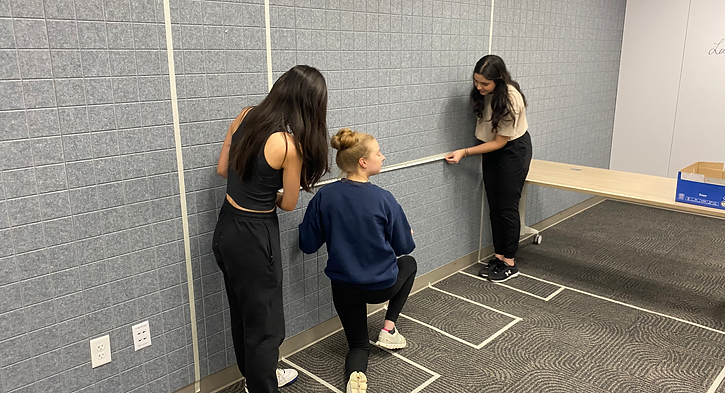
During our prototyping process, While we couldn’t implement large-scale user testing, we learned the importance of adaptability by using available resources creatively to simulate real-world interactions and gather meaningful insights within our constraints, like taping one-to-one measured areas on the wall and placing chairs for scale.
Accessibility and Convenience

Each seat includes ample legroom, power outlets powered by the tram’s solar windows, and a compartment for safely storing bags. Additional overhead storage is available for larger items, and the tram’s expansive windows provide panoramic views and display information about city landmarks using smart glass, encouraging passengers to engage with the scenery.
Accessible areas are positioned near each door, allowing easy entry and exit without moving through crowded spaces. The exterior smart cameras detect if a passenger requires these zones and interior lights blink three times to vacate the area. A guiding light trail and tactile floor markers assist the passenger in reaching their spot, which remains illuminated until they exit. Additionally, PeachLink includes QR code signage and tap-to-pay stations throughout the tram, creating an intuitive, frictionless boarding process, familiar from current parking and retail systems.
Community building
PeachLink offers inter-city connectivity, linking neighborhoods and densely populated areas. It provides a fast, efficient way to travel all over Atlanta, inviting residents and visitors alike to explore new areas. In celebration of Atlanta’s vibrant culture, the bottom half of each hub’s exterior will be wrapped with the work of local artists, curated by an annual open art competition. As the PeachLink network continues to grow, new trains will regularly be added, each one a fresh canvas for community art.

To enhance community connectivity and engagement, PeachLink features integrated window displays that keep riders informed throughout their journey. These displays provide real-time updates on local news, upcoming events, and announcements, creating a pulse of the city that riders can follow as they travel.
Highlights of nearby businesses, eateries, and attractions are also showcased, encouraging exploration and supporting Atlanta’s vibrant local economy. This seamless blend of transportation and information keeps everyone in the loop—both literally and figuratively—by transforming each ride into an opportunity to stay engaged with what’s happening around them and discover hidden gems across the city.
Interconnectivity Through Maps
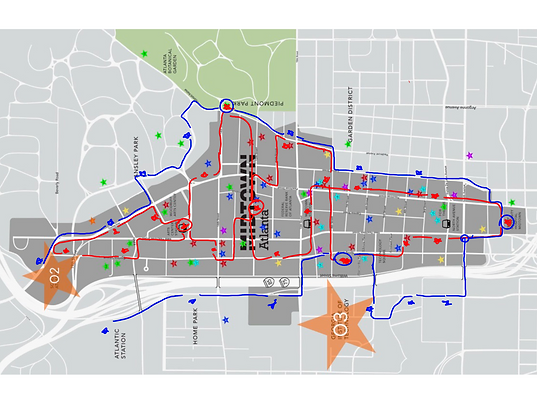

The Midtown map is a prime example of how PeachLink strengthens connections within the city. Instead of relying on a single, large look, PeachLink’s route utilizes two interwoven figure-eight paths. This stacked figure-eight configuration enables more direct travel within the neighborhood, allowing passengers to reach their destination quickly and efficiently by covering ground both horizontally and vertically.
On the other hand, the Downtown map includes an overlay of the existing Atlanta Streetcar route, highlighting the limited reach of the Streetcar, which mainly serves popular tourist spots and lacks the coverage locals need. By contrast, PeachLink’s figure-eight design is the standard across its routes, creating a consistent and intuitive system throughout Atlanta. This thoughtful layout fosters stability and cohesion between neighborhoods, making it easy for riders to navigate the system and recognize its uniform structure.
Outcome
PeachLink is not just another transit system; it’s a forward-thinking response to Atlanta’s transportation needs, blending the best features of light rails and trams to create a versatile, eco-friendly, and highly accessible solution. PeachLink’s core design elements focus on community connection, accessibility, and sustainable materials, making it unique among Atlanta's existing options. Key features like low-floor boarding, wider doors, a fully self-driving system, and adaptive accessibility zones promote inclusivity and safety, elevating the experience for all passengers.
This commitment to innovation extends beyond transport; PeachLink envisions a seamless integration with Atlanta’s neighborhoods, fostering community engagement through its integrated artist program, real-time local updates, and rewards app, which incentivizes riders to support nearby businesses. With its thoughtfully planned routes, PeachLink ensures that every ride connects Atlanta’s diverse communities, empowering residents and visitors alike to navigate the city with ease. As PeachLink grows, it will contribute to reduced traffic congestion, cleaner air, and revitalized local economies, positioning itself as both a transportation staple and a catalyst for Atlanta’s sustainable future.
Moving Forward
The next steps for PeachLink would involve user testing through pilot programs in key Atlanta areas, gathering feedback on accessibility, efficiency, and overall user experience. Partnerships with local organizations could enhance community integration, while refining features like the interactive window displays and app would elevate the rider experience.


