

TYR: Choose your story
What is a vehicle? Is it a means of transportation? Is it an object that you own and cherish? Or is it a tool? Depending on who you ask, they might define it in different ways; but to me, it is a companion. It comes with you on your daily commute, your weekend getaways, and your secret rendezvous. TYR was designed with that principle in mind: we're not making a car just for anyone; we made a companion for your journey.
Project Summary
TYR is a compact electric vehicle designed to adapt to you and your needs. This EV seamlessly embodies our brand ethos —evident in both its digital design and physical construction— which aligns with our ecological, anthropological, and technological values.
Goal
To design and build a compact electric vehicle that adapts to diverse user needs while embodying ecological, anthropological, and technological values, showcasing an innovative, user-centric approach to sustainable transportation.
Team
Daisy Cao
Nazan Mehal
Gabrielle Smith
+36 more
Time Frame
30 weeks
Tools
Rhino
Vizcom
Keyshot
Adobe Creative Cloud
Skills
Design research
Insight translation
Rapid prototyping methods
Product rendering


Market and User Research

Initially, we identified our target audience and researched their traits, environments, pain points, and gains. This is how we identified our goal user: the Independent Voyager.

The Independent Voyager, is defined by a desire to craft personal and professional narratives. They possess a keen awareness of who they are and strive for authenticity in both the digital and physical realms.
They also champion work-life balance and are vocal about their pursuit of a sustainable and meaningful lifestyle.
They are action-oriented, patronizing local businesses, exploring the great outdoors, and consciously choosing brands that reflect their values.
Of course, even during this stage, we never stopped sketching ideas.
Sketching and Ideation


The ideation stage of TYR involved a collaborative approach divided into two distinct quarters. During the first quarter, we focused on the exterior design, exploring the vehicle's overall form, proportions, and visual identity. I wasn't directly involved in the process during the first quarter, but I did have some influence in the final design, which we refined at the beginning of the second quarter.

In the second quarter, our attention shifted to the interior, prioritizing user comfort, accessibility, and technological integration to ensure a cohesive experience.
This stage is where I had the most impact on the project and where my design skills shined brightest. I was lead of interior design, with a focus on seating design. I also influenced the final versions of the door, dashboard, and display designs.
Throughout all phases of design, we used tools like Vizcom to create quick renders of our sketches, allowing us to visualize and iterate our designs in context. This process allowed us to test how each design aligned with our values, ensuring TYR was not only functional but also adaptable to diverse user needs.


Surface Modeling

After finalizing our initial sketches and small foam models, we transitioned to solid and surface modeling using Rhino to iterate on TYR's design.
This phase allowed us to refine every curve and detail, ensuring both aesthetic appeal and functional efficiency.
To visualize our concepts in a realistic context, we rendered the designs using KeyShot, which provided high-quality visuals for evaluation and presentation of materials.
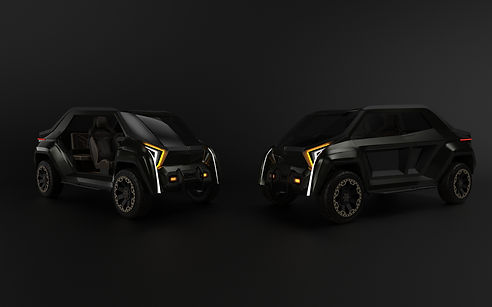

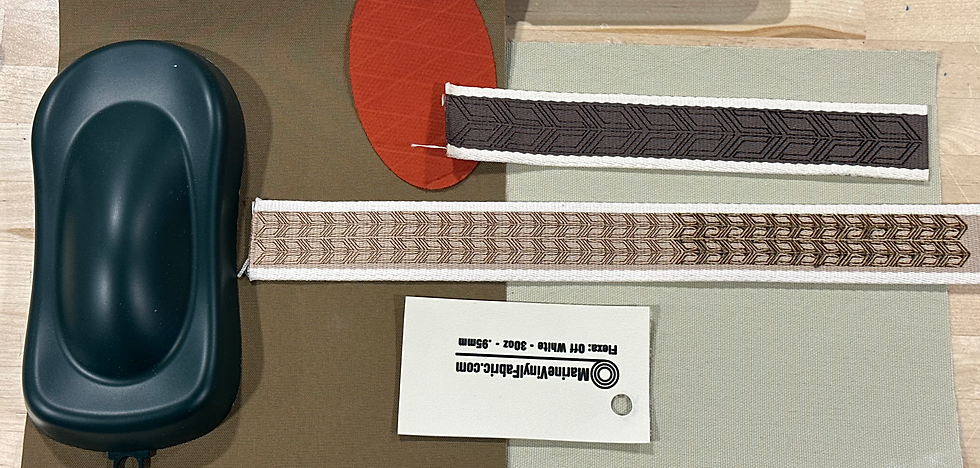
Parallel to the modeling process, we also started looking at CMF: What materials align best with our ecological values but provide enough sturdiness to be durable? What colors work best with our deep green exterior? Do we include textures? Finishes? Screens?
This process involved a lot more research, communication with companies and experts, and a bit of experimentation and play.
Quick Prototyping and User Testing

To bridge the gap between digital and physical, we 3D printed prototypes of our designs for better detail analysis. We also built full-scale foam models to verify dimensions and ergonomics in the real world.
For the final, fully functioning prototype, we purchased an electric car "skateboard" base. We scanned this base into Rhino to double-check accuracy and ensure our design aligned perfectly with the underlying structure.


Once satisfied with the final design, we collaborated with a manufacturing company to create molds for the prototype. These molds allowed us to produce a fiberglass version of Tyr, bringing our vision to life as a polished and fully realized vehicle. This process ensured precision and professionalism at every stage of development.
Outcome
Tyr: Compact Electric Vehicle is more than a transportation concept—it’s a tangible solution designed to adapt to diverse user needs while embodying ecological, anthropological, and technological values. Through meticulous design and collaboration, we created a fully functional, full-sized prototype that seamlessly combines innovation with practicality.
The final prototype not only reflects our brand ethos but has also gained recognition for its impact. Currently touring the country, Tyr has been celebrated by notable platforms like Forbes, highlighting its potential to inspire and shape the future of sustainable urban transportation.
Moving Forward
A key step to further develop Tyr would be exploring scalability and manufacturability by collaborating with industry professionals to refine production methods. Expanding the branding and marketing strategy would also ensure Tyr’s message of accessible, eco-friendly transportation reaches its full potential. These steps would solidify Tyr as a viable and impactful solution in the EV market.


