
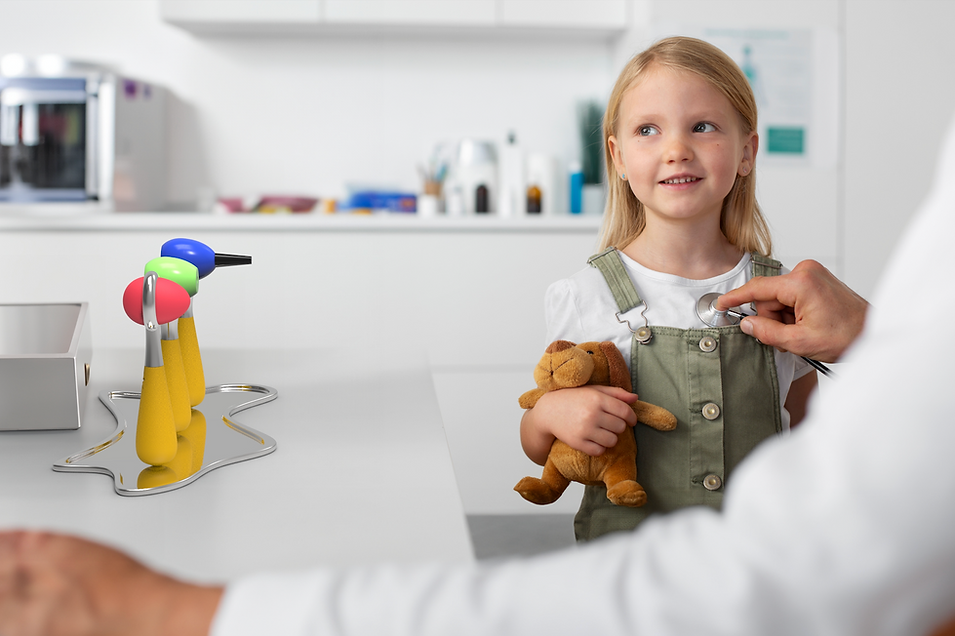
TinyLives: Medical Equipment
TinyLives: Medical Equipment is a project that was created to change children’s experience at the doctor's by making it enjoyable and anxiety-free. By designing medical tools that are bright, graspable, and soft, we hope to help soothe the child’s uneasiness with inviting and familiar visual stimulation.

Project Summary
According to Sarah J. Clark, a researcher in the Department of Pediatrics, children’s anxiety can negatively impact parents’ interactions with providers during visits and even cause some families to postpone or cancel appointments.
Goal
By creating medical tools using the design language of toys, we want to create a product that children can relate to in order to tackle one of the biggest obstacles in the way of making their doctor's visit successful: fear.
Team
George Saxon
John Gibson
Time Frame
10 weeks
Tools
Figma
Rhino
Keyshot
Photoshop
Skills
Task analysis
User analysis
Rapid prototyping methods
Product rendering


Toy Brand Analysis

Initially, we studied the design language of popular kid’s toy brands. We specifically focused on toys targeted to children ages 2-5. After analyzing the fundamental aspects of their designs, like color, material, and form, we gathered and made note of any recurring themes. Thanks to our research, we were able to define the guidelines we wanted to adhere to moving forward:
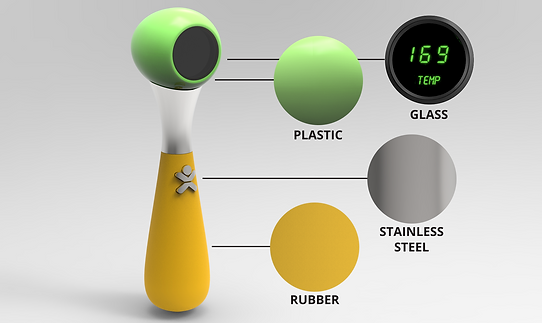
1. Safety first.
2. Focus on soft forms with geometric details.
3. Red, blue, yellow, and green as the main colors.
4. ABS as the main material and rubber as a secondary material.
5. Inviting, graspable design language.
Pediatric Tools Analysis

The next step was to research medical tools and their use of color, form, and material; this time putting particular focus on the why, since safety and hygiene were our priority in this case. We focused our research on tools that have a more direct interaction with children during their visit, like physical contact, and might naturally have an intimidating tone to them. That’s how we ended up making the following instruments our focal point:

1. Reflex hammer: The process involves a healthcare provider tapping the knee with a rubber hammer, and the cold look of it combined with the action itself might frighten a young kid.
2. Otoscope: Used to look inside of ears, a vulnerable spot to most, but much more to children, whose senses are more keen and sensitive.
3. Thermometer: Can be menacing, especially handheld ones, as they might resemble a certain unpleasant object. Some of them even feature triggers, making matters worse.
With our initial set of guidelines in mind, we created an updated list, which had the addition of stainless steel as one of our main materials.
Product Form Exploration

After clearly defining our issue and conducting deep research, we started our initial sketching, and shortly after some pink foam modeling. An early round of user testing and peer feedback gave us invaluable insights that we used to fuel our solid modeling.
These prototypes were much more refined, which proved useful during our second round of testing, as we got much more specific feedback. Using all of this information we produced our final 3D models, and combined 3D printing methods such as extrusion printing and resin printing to create our final physical prototypes.

Take-Home Toy Kit


But we didn’t stop there. After designing the professional medical equipment in the style of toys, we turned our attention to an additional step that would help us mitigate children’s uneasiness for good. We designed an additional set of tools, but this time with the intent of creating actual toys. That way, the first time kids visit their pediatrician’s office they interact with tools that feel welcoming to them, but they can also take a similar set home.
Design Features


Outcome
TinyLives: Medical Equipment is a project that goes beyond design just for aesthetics. It focuses on the impact that medical appointments have on the early development of children, and aims to tackle one of the biggest obstacles in the way of making their visit successful: fear.
We fear things that are unknown to us, and the most efficient way to teach children about the things that surround them is with their toys and games. That’s why we created a product that they could relate to, and a way to make it even more personal by taking it home and including it in their play dates.
Moving Forward
More rounds of user testing, which would involve kids and doctors, would be needed before these prototypes can be “finalized”. This means conducting testing using prototypes that are made from the proper materials and developing a manufacturing strategy plan.


